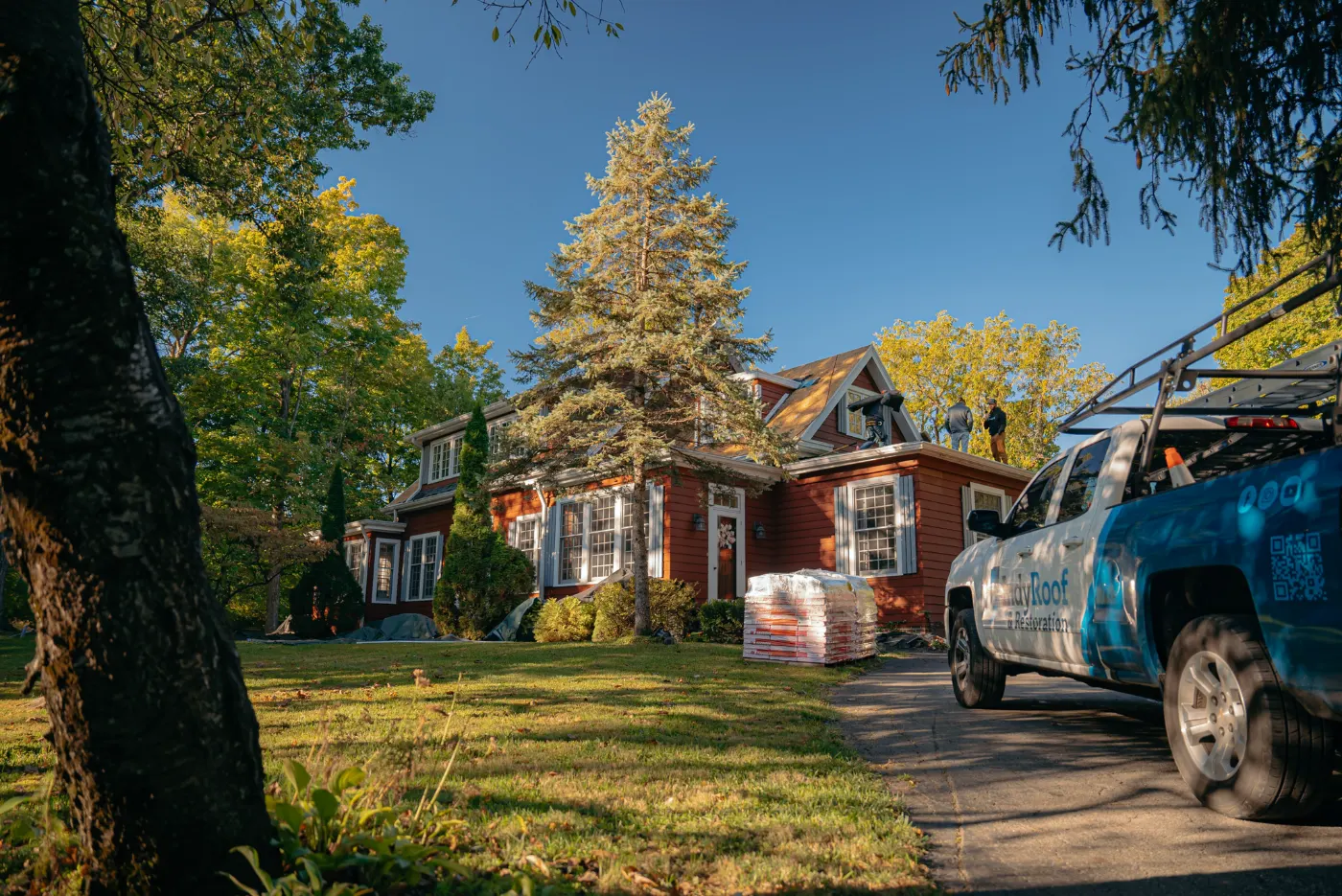
The Roof Repair Your Clay City House Needs
Clay City Roofing provides roof inspections, repairs, and replacements for homeowners across Clay City, from the older homes near Main Street to houses tucked along the quieter side roads. Licensed and insured in Indiana, we offer free inspections and written estimates so you know exactly what your roof needs before any work begins.
If we're busy helping someone else and miss your call, we'll call you back within 15 minutes.



Storm damage in Clay City? Clay City Roofing inspects, documents panel by panel, and meets your adjuster on the roof speaking their language. Call (765) 703-8133.
- Services: roof inspections, roof repair, emergency roof repair, roof replacement
- Service area: Clay City, Clay, IN and surrounding areas
- Response: Storm calls across Clay City answered promptly; damage documented before weather erases it
- Licensed and insured (License #RC21100059)
- Serving Clay City, IN since 2018
Schedule Your Free Roof Inspection
A roof inspection in Clay City starts with a walk of the roof itself, not a glance from the driveway. Our crew checks shingle condition, granule loss, soft or lifted areas, flashing around chimneys and vents, valleys where water concentrates, and any signs of storm impact or plain age related wear. Everything gets documented with photos so you can see what we see, and so you have a record if a storm claim comes into play. A lot of Clay City roofs are older than the shingle warranty on them, which means small issues have often been quietly building for years. Catching those early is how you keep a minor repair from turning into a full tear off before its time.
I agree to be contacted by Clay City Roofing regarding my inquiry.
A second layer of shingles hides everything beneath it on a Clay City roof. The overlay that saved money years ago now conceals the deck, traps heat that ages both layers faster, and adds weight the rafters were asked to accept without a vote. When trouble comes, it comes blind, and the Clay tear off that follows reveals whatever the first layer had been covering all along.
Every Clay City Roofing roof in Clay City runs through one named lead, first ladder to final walkthrough. Questions get answered at the tailgate in plain English, schedule changes come by phone before the appointment window, and the direct number keeps working after the invoice clears. Across Clay, homeowners should never have to wonder who is responsible for the roof over their family.
Selling a Clay home? Clay City Roofing writes pre listing roof letters the closing table can trust: condition documented, remaining life estimated, repairs itemized where they exist. Sellers who negotiate from records keep more of their price than sellers negotiating from a buyer inspector's adjectives. Call (765) 703-8133 before the sign goes up in Clay City.
Payment Options That Work for You
Your Clay City Roofing project lead will walk you through every financing option during the assessment. Terms in writing, no pressure, no surprise charges.
Pay for your project at a later time, but lock in today's pricing. Ideal for homeowners waiting on insurance settlements.
- No payments for 12 months
- No interest if paid in full
- Lock in current pricing today
Divide your project cost equally across 12 months with zero interest. Most homeowners choose this option for predictable budgeting.
- Equal monthly payments
- 0% interest for 12 months
- Simple, predictable budgeting
Spread your investment over up to 20 years with fixed equal payments. The right choice for larger projects or homeowners who prefer lower monthly amounts.
- Up to 20-year terms available
- Fixed equal payments
- Ideal for larger projects
Financing provided by Slice, Foundation Finance, Regions. Subject to credit approval. Rates, terms, and promotional periods are set by the lender and disclosed in writing before you sign.
How We Handle Clay City Roofing
Inspections, repairs, replacements: Clay City Roofing covers all of it with manufacturer-certified crews and paperwork that spells out what was done.
Roof Inspections in Clay City
A full on site look at your Clay City roof, covering shingles, flashing, valleys, and penetrations, with photo documentation of every finding. You get a clear read on condition and any storm or age related damage before any work is discussed.
Learn moreRoof Repair in Clay City
Targeted repair for Clay City roofs dealing with damaged shingles, failed flashing, small leaks, or wind and hail impact. We fix the problem area and confirm the surrounding roof is sound so the repair actually lasts.
Learn moreEmergency Roof Repair in Clay City
Fast response repair for Clay City homes with active leaks, storm damage, or roof openings that need to be secured. We stabilize the roof to stop further damage and follow up with a full inspection and repair plan.
Learn moreRoof Replacement in Clay City
Full tear off and replacement for Clay City roofs at the end of their service life or beyond repair. That includes new underlayment, flashing, and shingles installed to manufacturer specs, with cleanup and a final walkthrough at completion.
Learn moreDesigner Roofing in Clay City
Premium shingle and profile options for Clay City homeowners who want a distinct look beyond standard architectural asphalt. Designer roofing covers the higher end shingle lines and detailed installation that give the roof more visual weight and character.
Learn more
Local Expertise, Real Results
The same person who walked your roof is the person who answers when you call back.
Hail does its damage in seconds and hides it for months. Clay City Roofing inspects Clay City roofs the way adjusters do, documents functional damage honestly, and tells you plainly when a roof does not need work.
Clay City Roofing was founded in 2018 by Aaron Christy, who has been featured on FOX59, WISH TV, and RTV6, and the company has spent years doing roofing work across central Indiana. We serve Clay City, the wider Clay County area, and surrounding towns like Brazil, Center Point, Bowling Green, Carbon, and Harmony. Our crews are local, licensed, and insured under Indiana license RC21100059, which means the people climbing on your roof know the housing stock in Clay City and how these homes were built. Whether you own one of the older railroad era houses or a mid century home in Clay County, we approach each roof with the same care.
The way we work in Clay City is simple. A crew member walks the roof, checks shingles, flashing, valleys, penetrations, and the problem spots that tend to fail first, and photographs everything we find. You get an honest written estimate with a clear scope, so there are transparent line items after the job starts. When the work happens, our crews focus on clean shingle work, proper flashing details, and leaving the property tidy at the end of each day. No invented certifications, no sales pressure, just roofing done the way it should be done.
Our Promise
We make three commitments to every Clay City homeowner. First, a free on site inspection before any work is discussed, so you know the real condition of your roof. Second, an honest written estimate with a clear scope and transparent line items tacked on later. Third, clean workmanship backed by a workmanship warranty, along with the standard manufacturer coverage that comes with the shingles we install.
The Clay City Roofing Difference on Clay City Roofs
Transparent pricing, careful inspections, and materials that last, for homeowners in Clay City and Clay.
Built For Storm Season
Spring and summer bring hail, straight line winds, and the occasional tornado warning through south central Indiana. When a storm rolls through Clay City, we prioritize inspections for homes with visible damage and get a written scope in your hands quickly. That way you can act before the next round of weather makes things worse.
We Know Clay City Homes
The housing stock in Clay City ranges from late-1800s railroad era houses to postwar infill, and each era has its own roof quirks. We know the low pitch gable runs, the tricky cross gable valleys, and where older decking tends to fail. That local read saves you money and prevents surprises mid project.
Inspection Through Completion
We handle the whole roofing job under one roof, from the first inspection to the final cleanup. That means one crew documenting the damage, writing the estimate, doing the tear off, installing the new system, and walking the finished work with you. No handoffs, no finger pointing.
Documentation Done Right
If a storm claim is in play, the quality of your photos and notes can make or break the outcome. For Clay City homeowners, we document damage thoroughly with clear photos, measurements, and written observations you can share with your insurance carrier. It gives your claim a fair shot.
Real Jobs. Real Results.
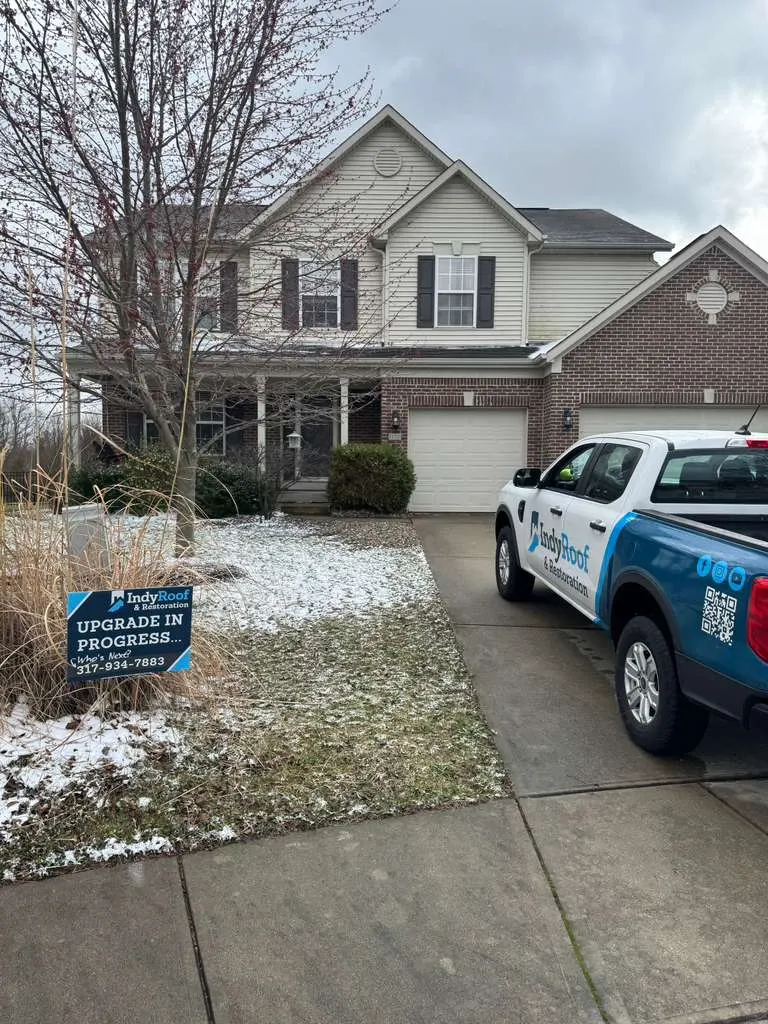
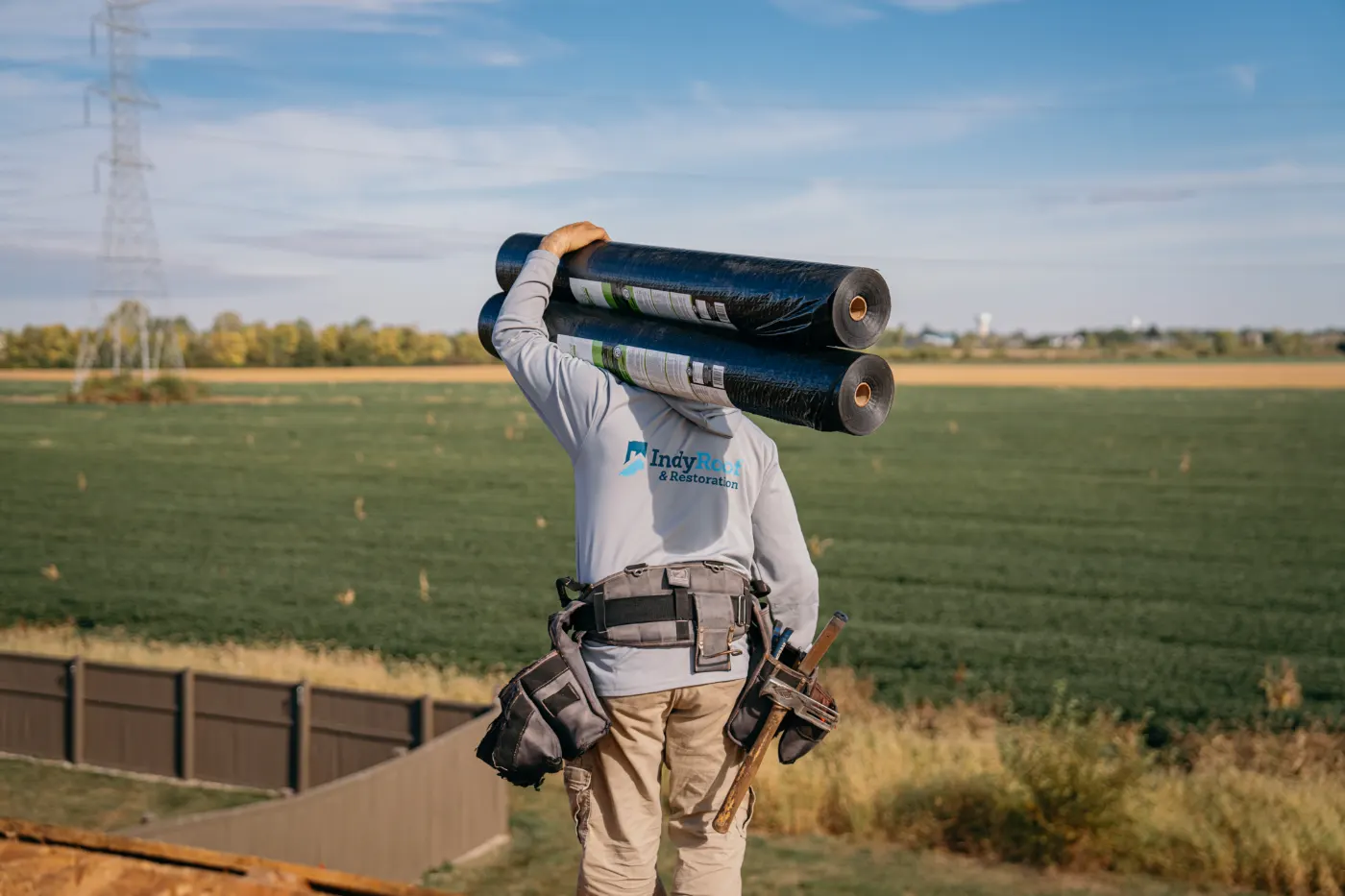
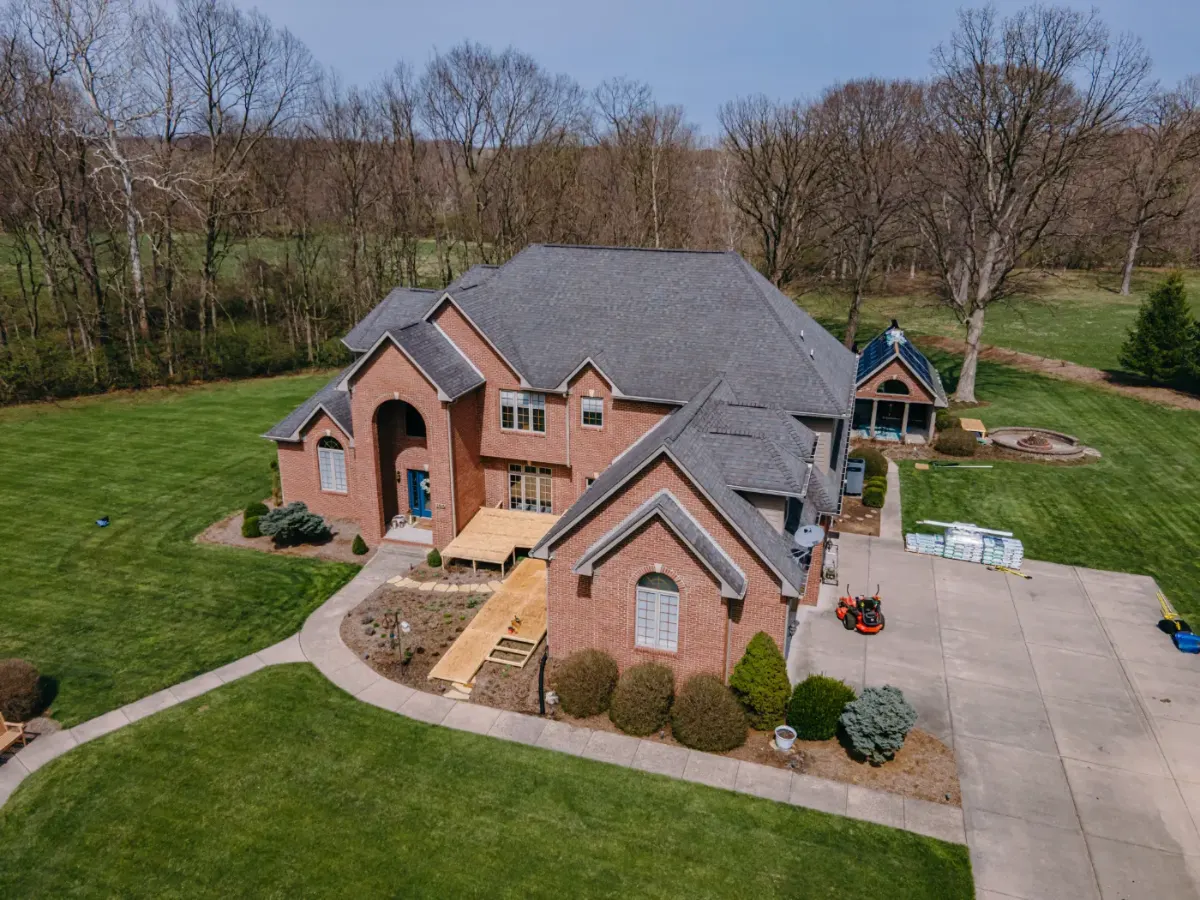
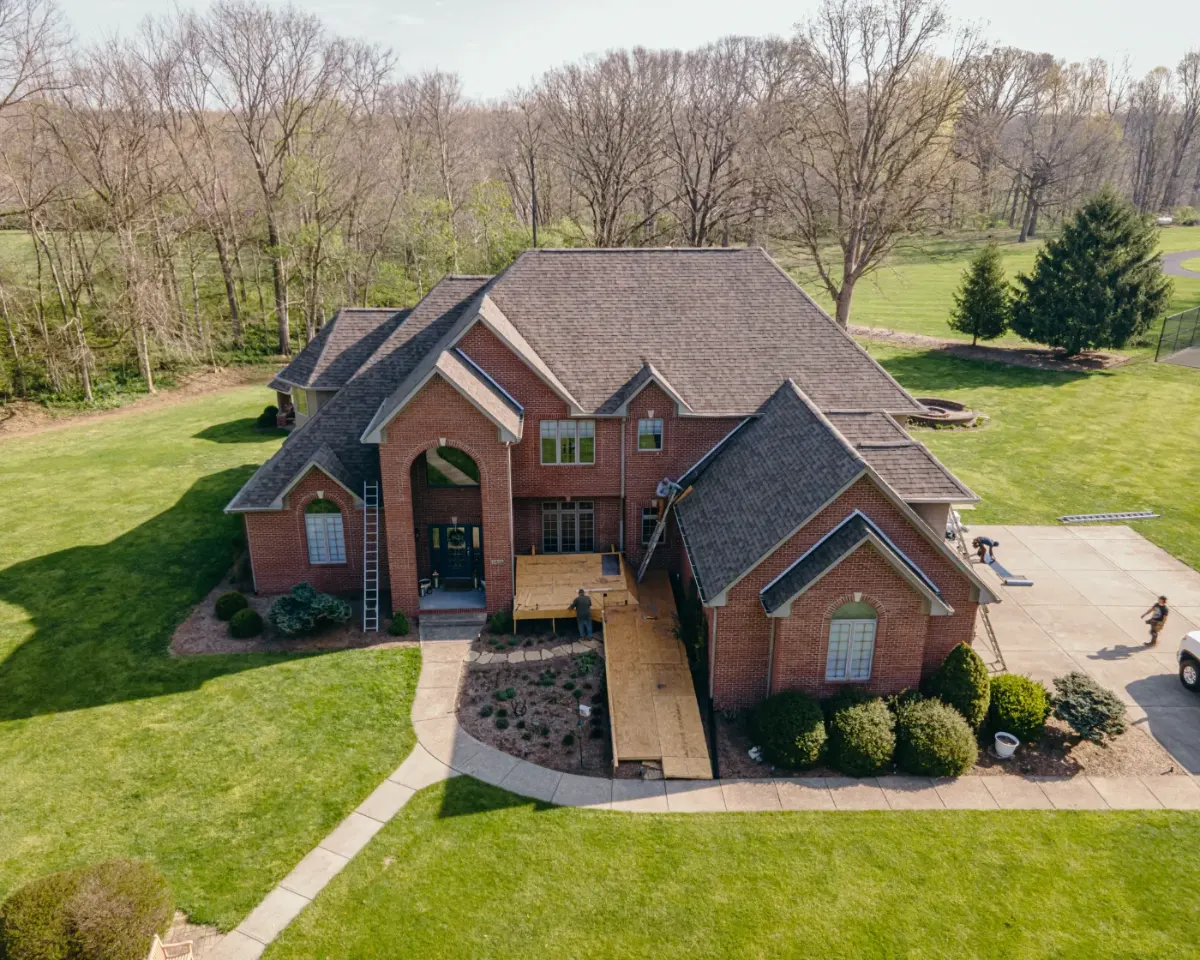
Photos from recent roofing projects completed by our manufacturer-certified crew across Clay City and Clay. Every project is documented with photos and a written closeout package.
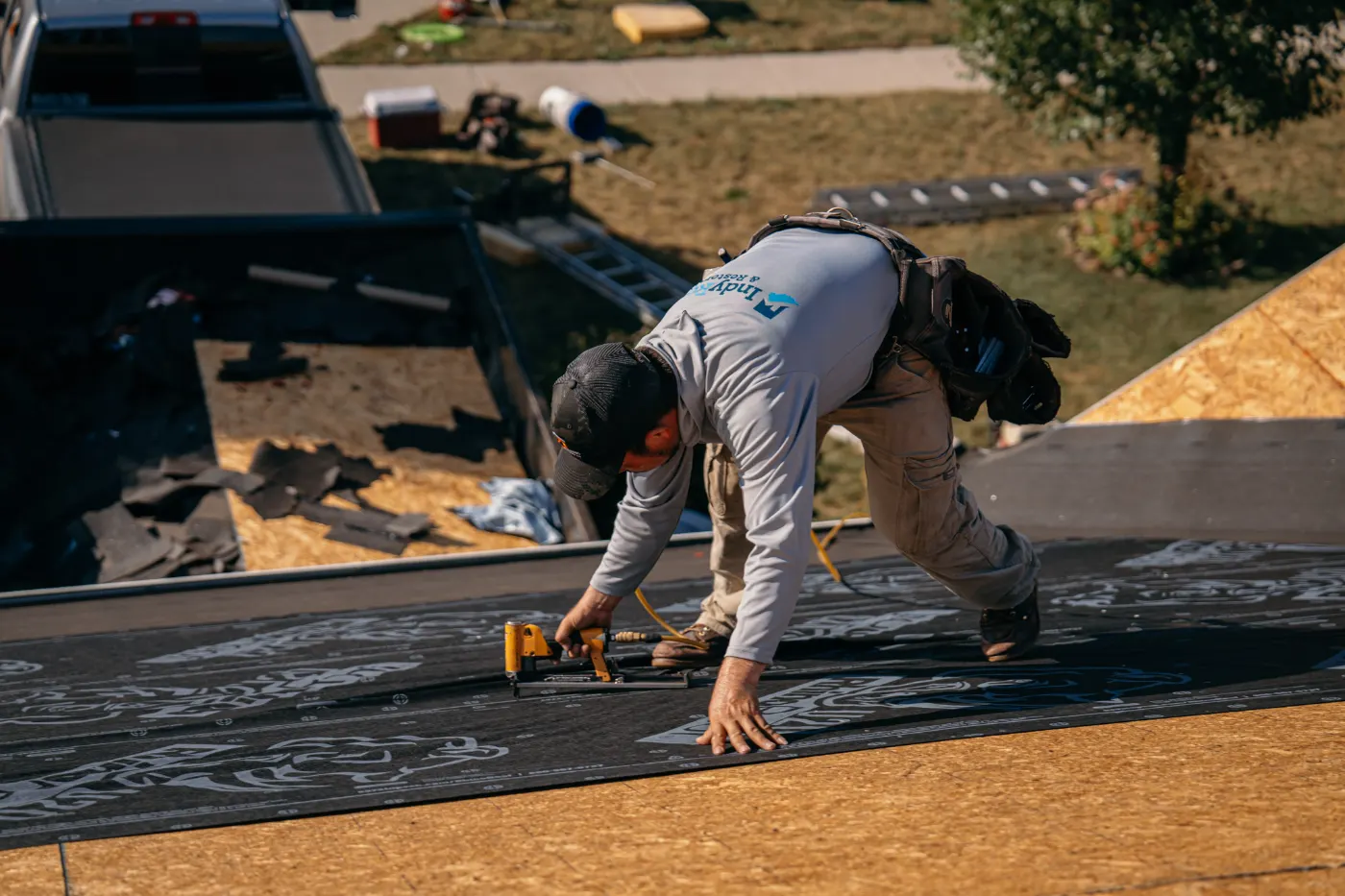
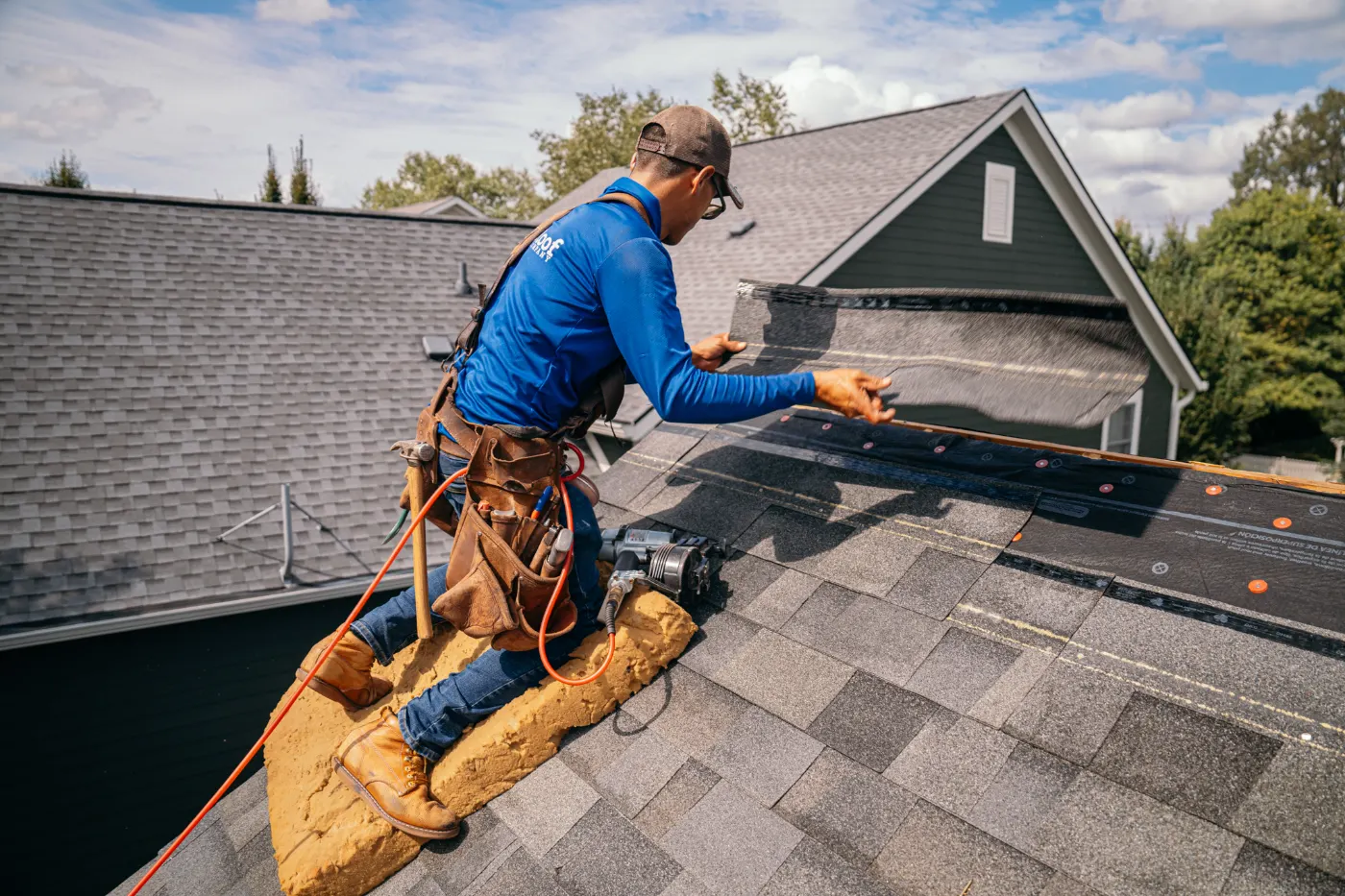
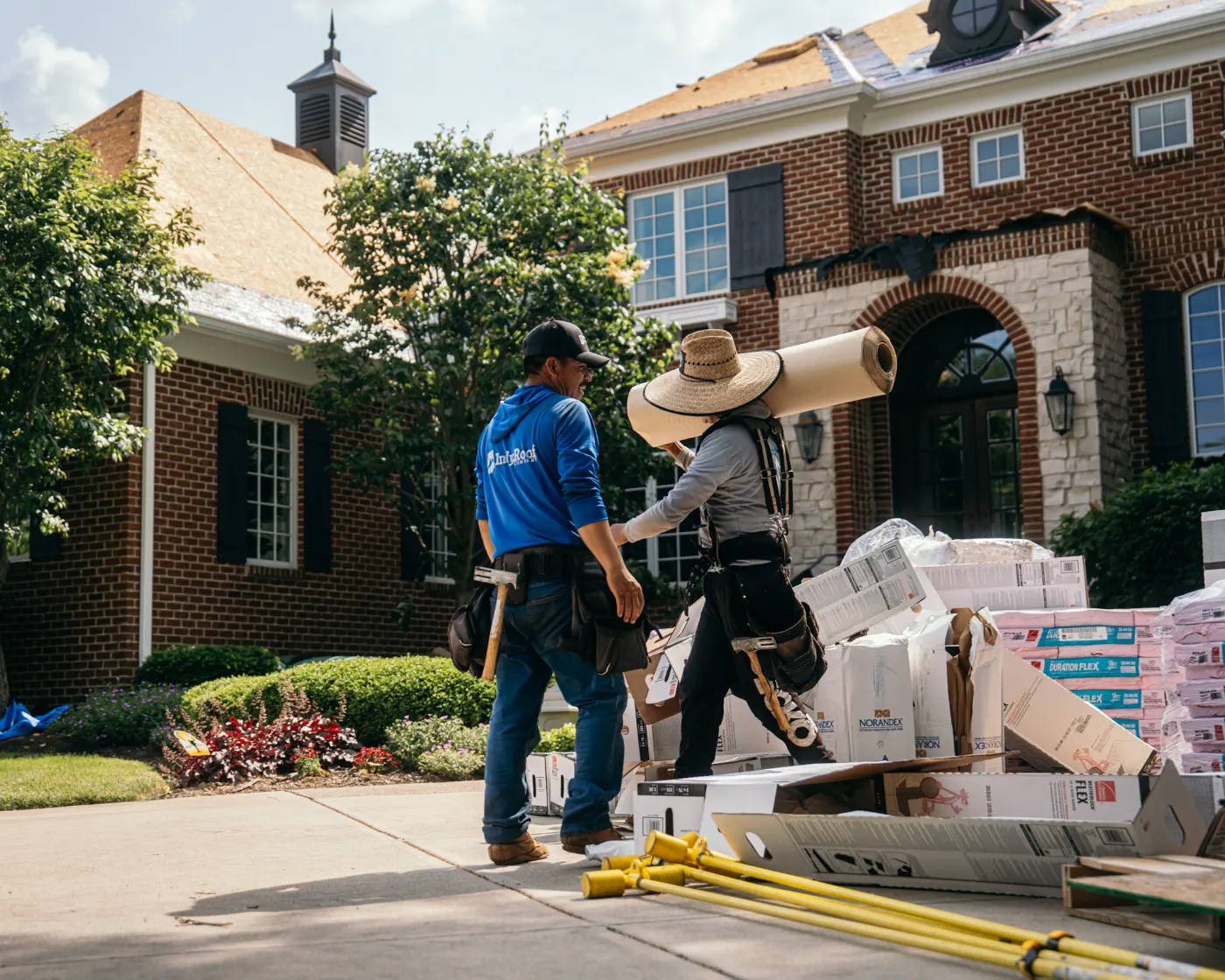
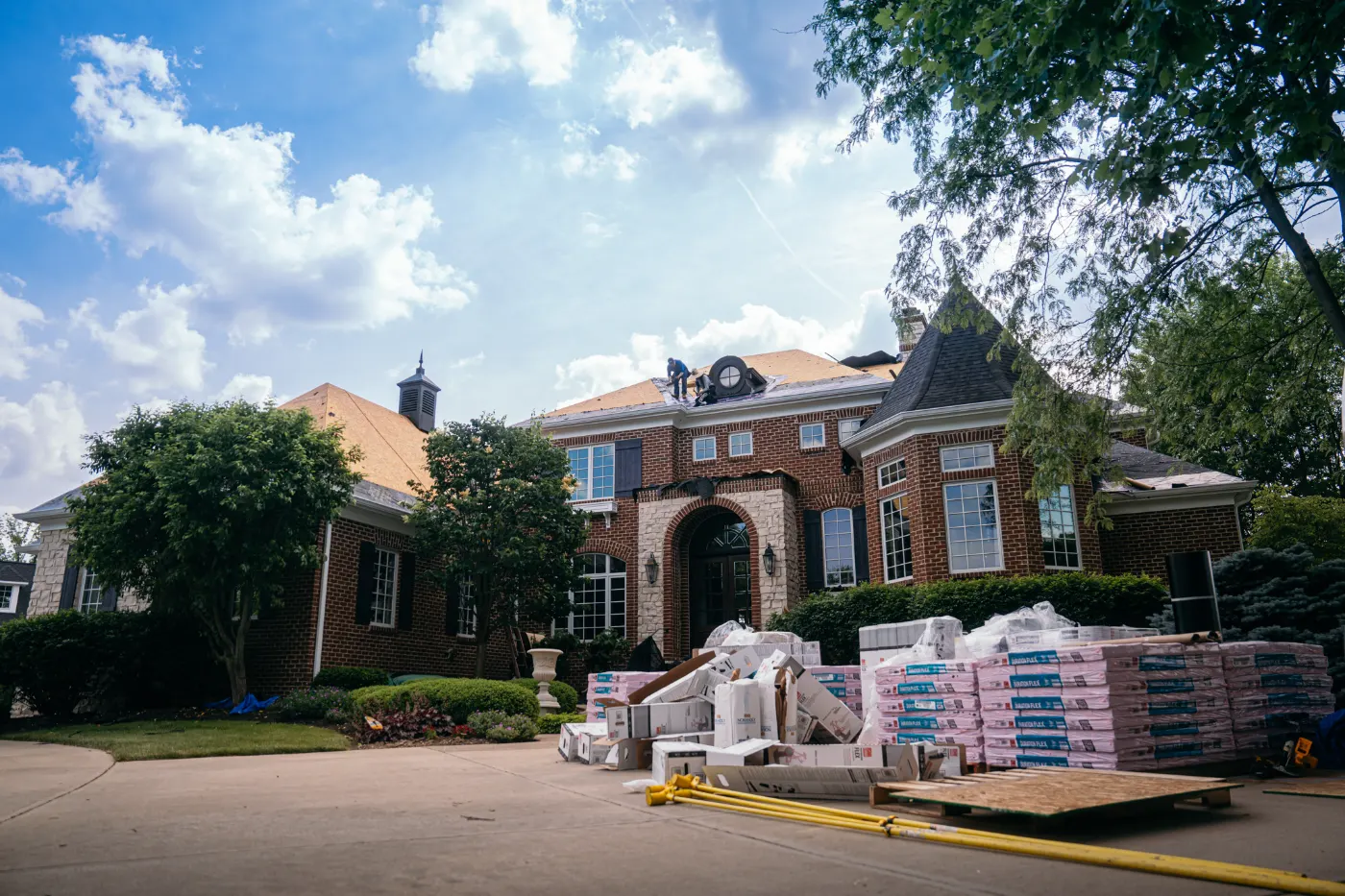
A Clay City Roof Replacement, Phase by Phase
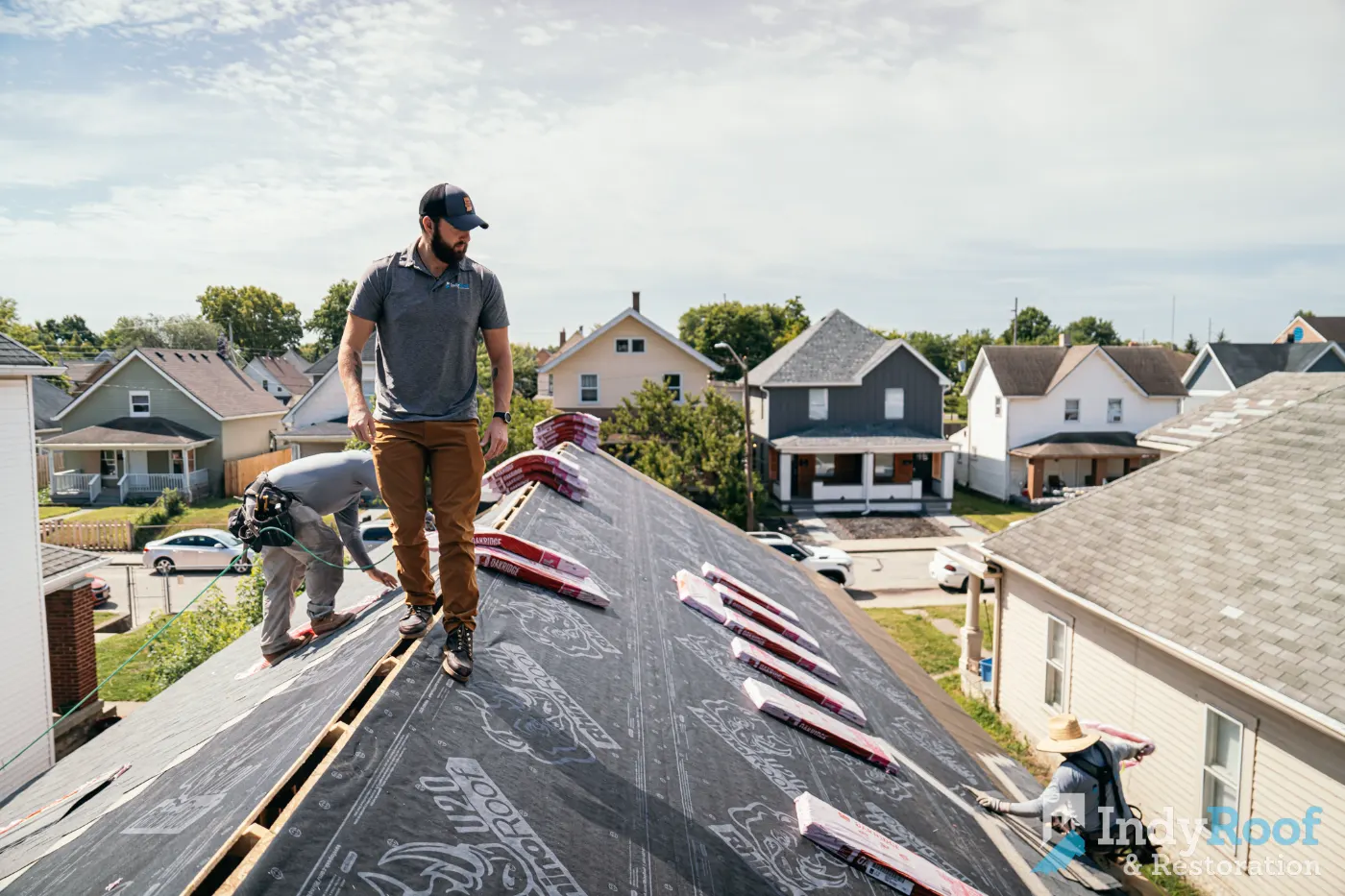
The first step is a real inspection. We come out to your Clay City home, walk the roof, and go through it section by section, looking at shingles, flashing, penetrations, valleys, and the decking condition where visible. Storm damage and age related wear look different, and we call out both. Every finding is photographed, and we talk through what we saw before anything moves forward. You end up with a clear picture of your roof and a defined scope, not a vague sales pitch about needing a full replacement when a repair might do.
Once the scope is set, you get an honest written estimate with the line items laid out plainly. If the damage is storm related, we document everything your insurance carrier and adjuster will want to see, including dated photos and measurements. We work alongside the homeowner through the claim process, but the relationship stays between you and your carrier, and payment terms stay between you and us. For Clay City homeowners dealing with a claim for the first time, we explain how the deductible, scope, and supplements typically work so nothing catches you off guard.
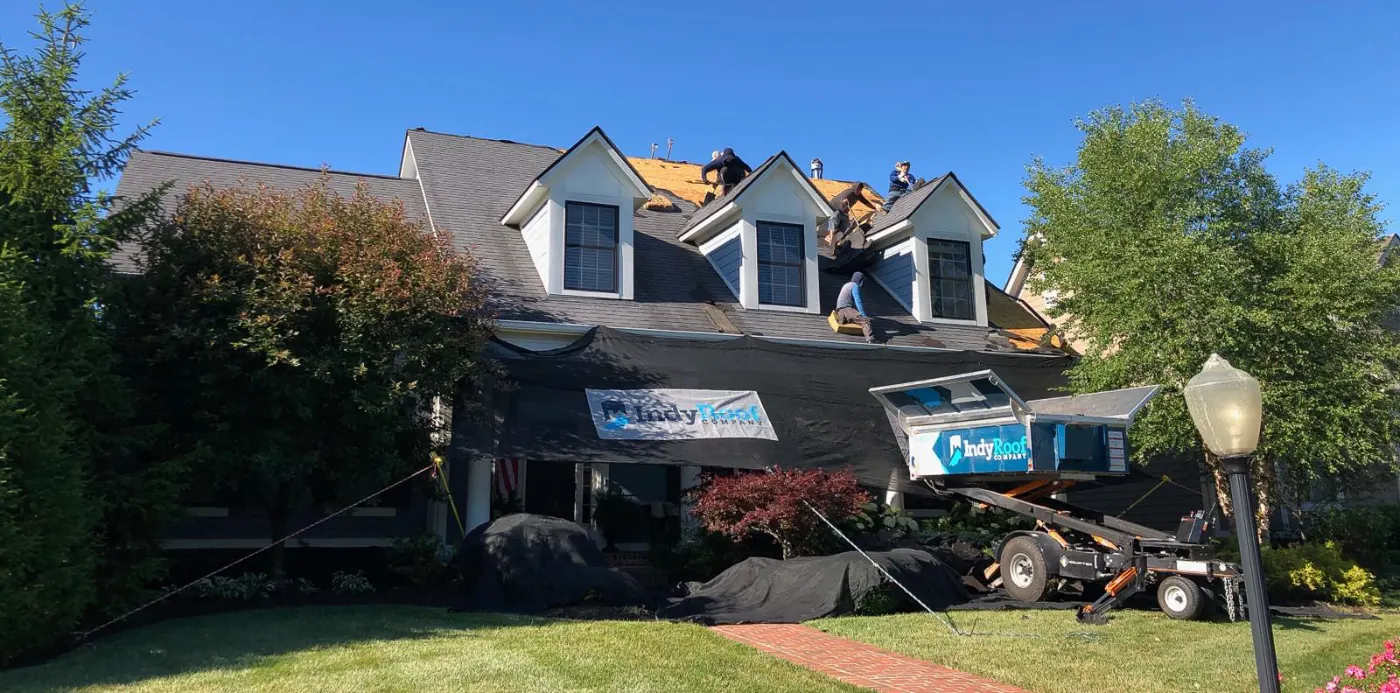
When the job is scheduled, the crew shows up prepared to protect your property. Tarps go down over landscaping, magnets sweep for nails, and dumpsters are placed where they will not damage the driveway. The roofing work itself follows the written scope, with proper underlayment, flashing, and shingle installation done to manufacturer specs. At the end, we walk the finished roof with you, review the work, and clean the site so the yard looks the way it did before we arrived. Clay City homeowners get a straight answer on any questions before we leave.
Free On Site Inspection
We come out, walk the roof, and document what we find with photos. There is no charge and no obligation to move forward. You get a clear read on the roof before any decision is made.
Honest Written Estimate
Every estimate is written out with the scope, materials, and cost laid plainly. No verbal handshakes, no vague bundles, transparent line items after the fact. If something changes mid job, you get told before it gets billed.
Insurance Documentation
For Clay City storm claims, we document the damage in the format your insurance carrier and adjuster expect to see. works with your insurance carrier, and we do not name drop policies we have no part in. You stay in control of the claim.
Clean Workmanship Finish
Once shingles are on, we do a final walkthrough with you and clean the site thoroughly. Magnets go over the yard and driveway for stray nails. The job ends when you are satisfied with what you see.
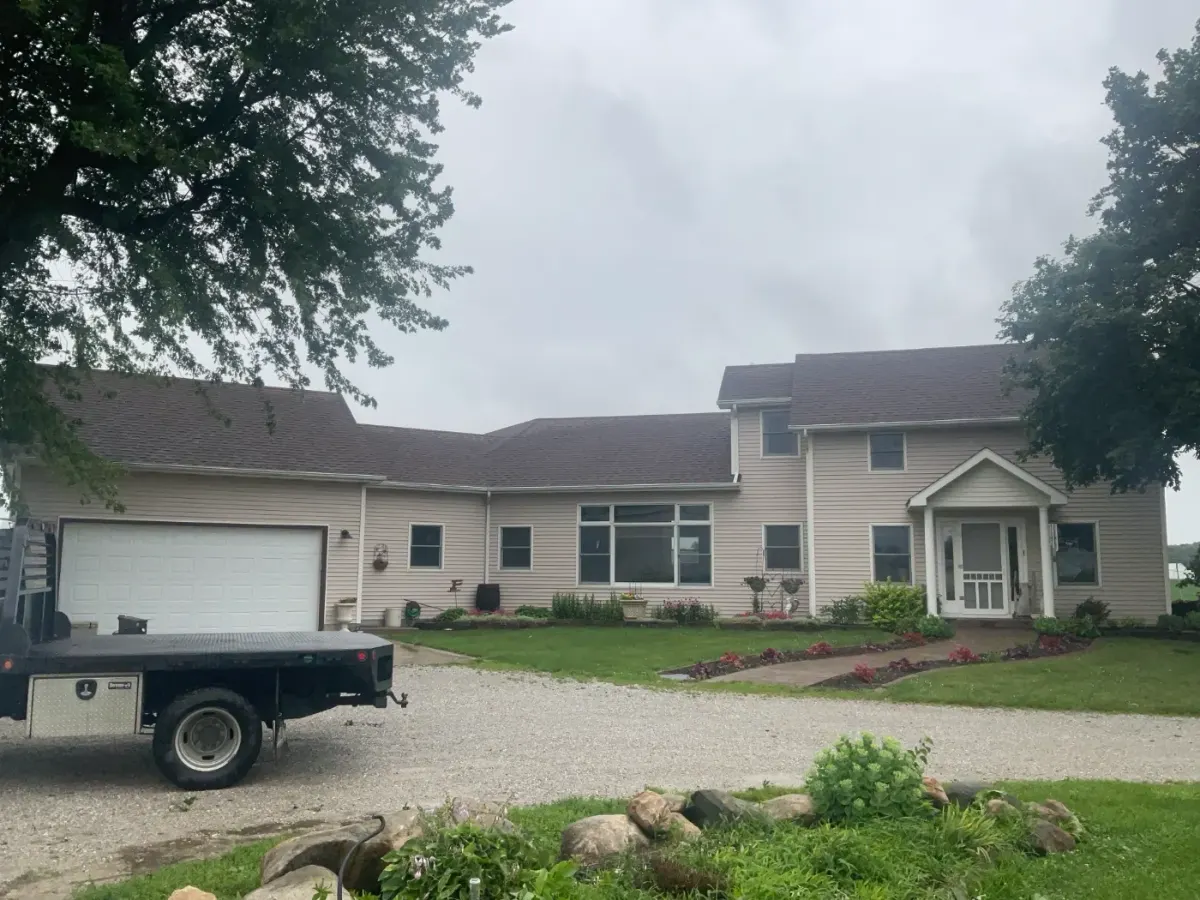
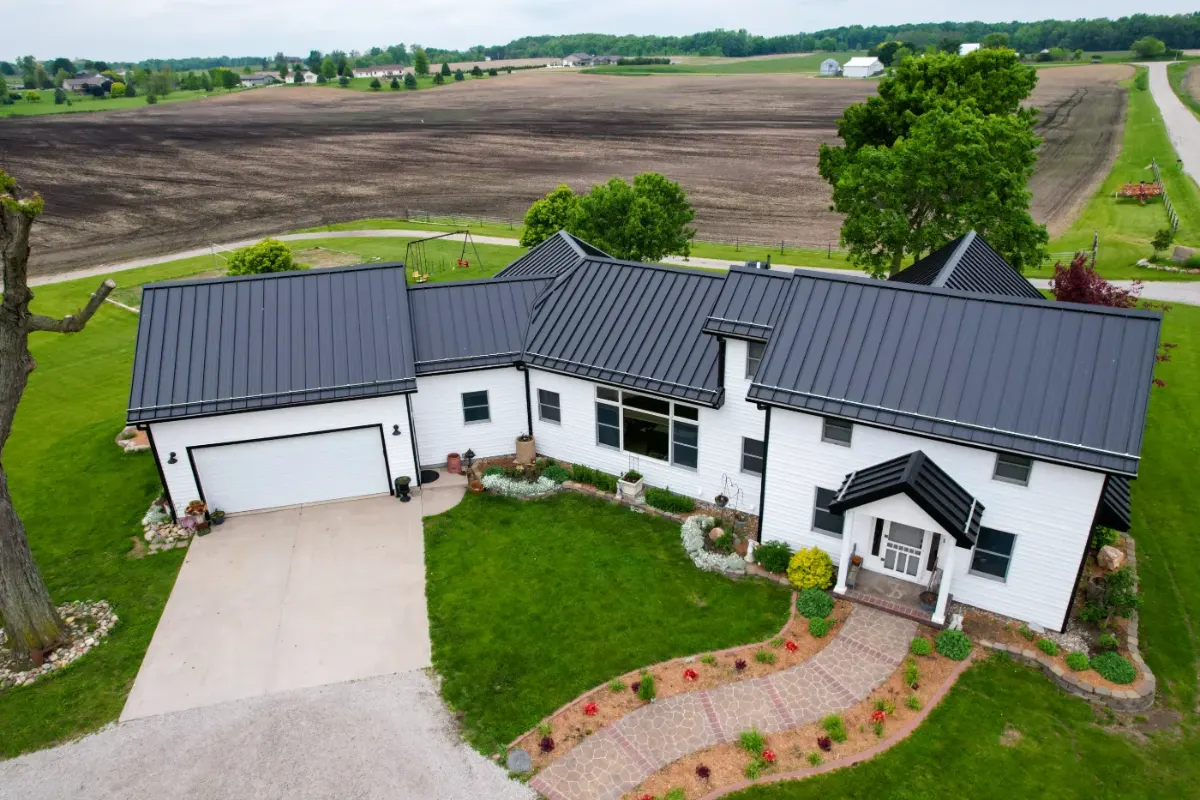
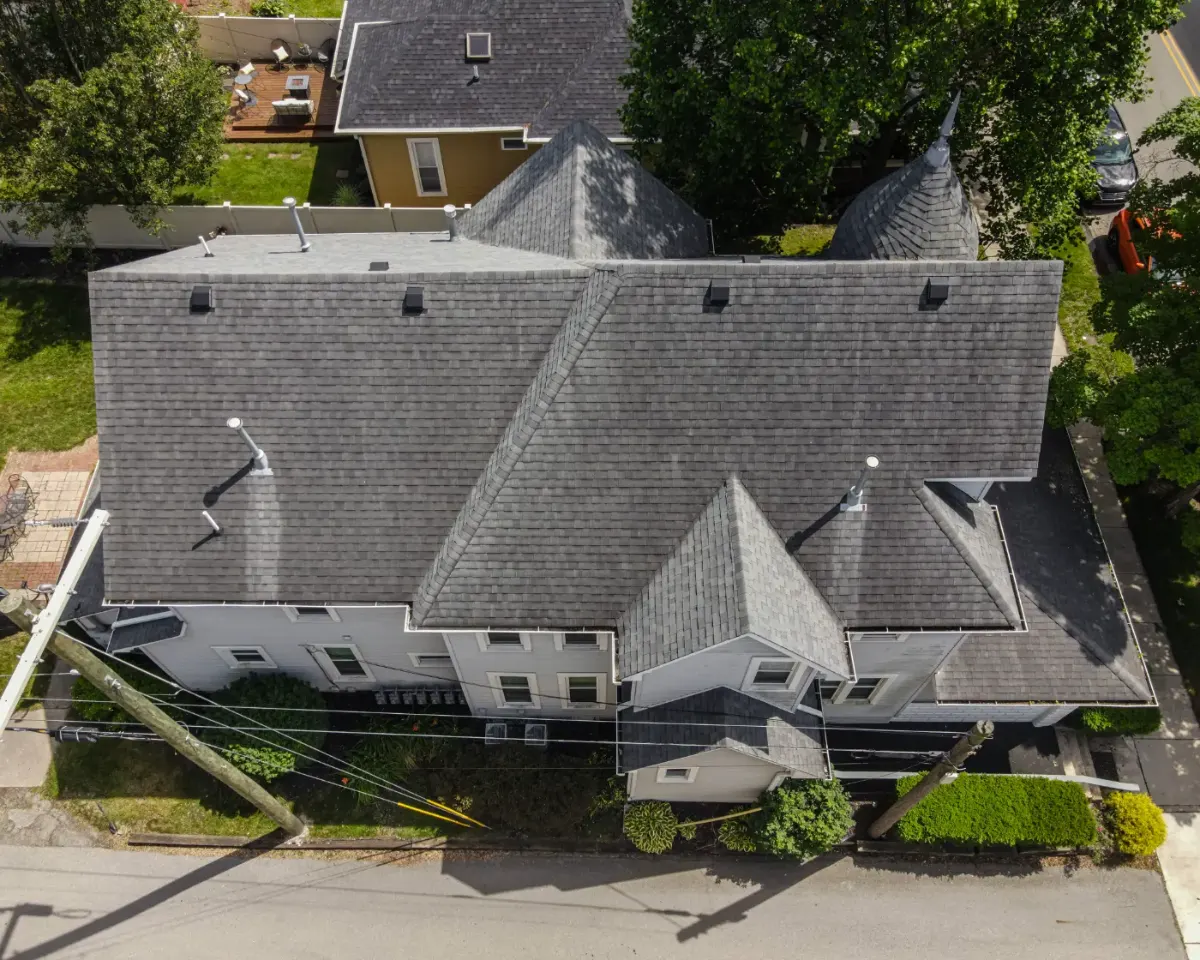
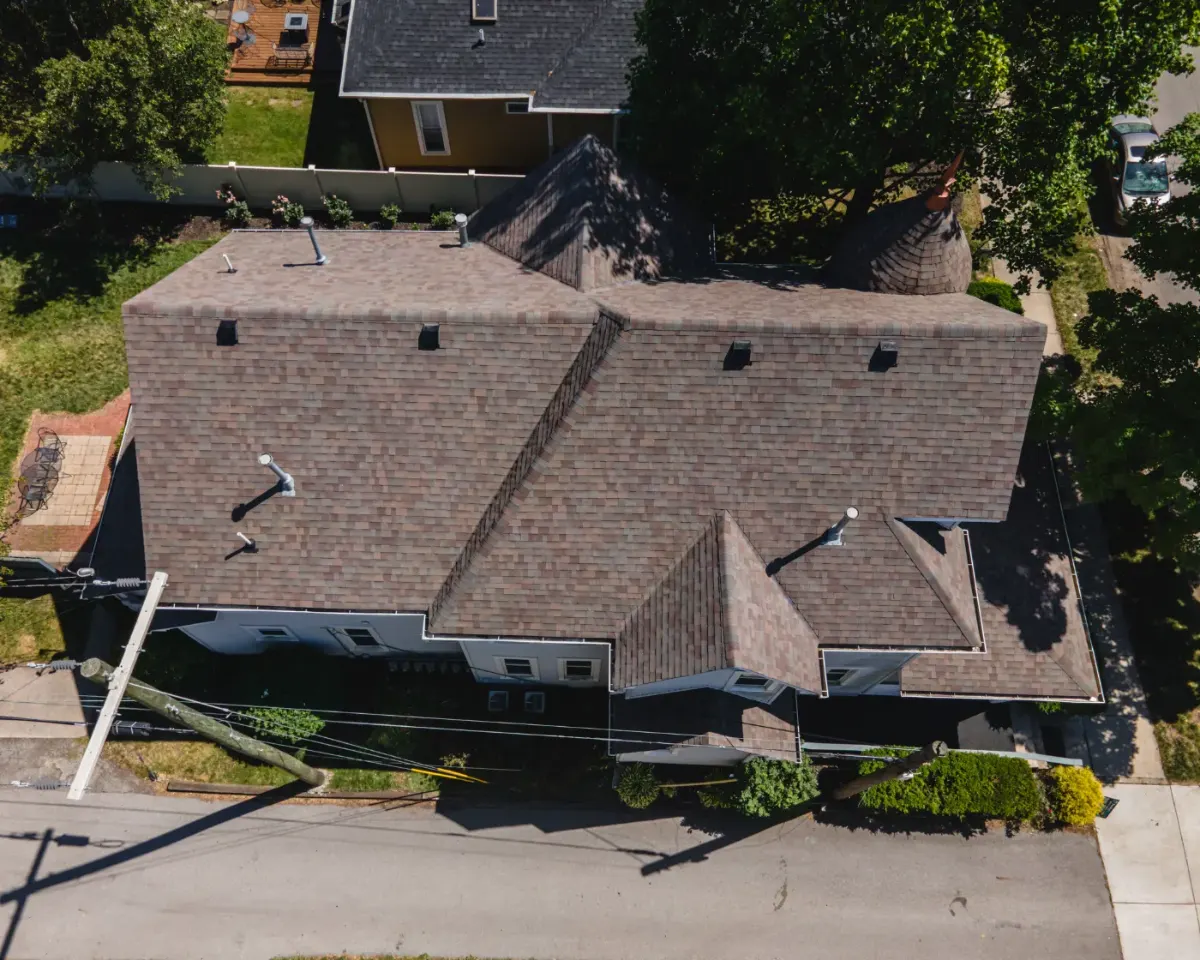
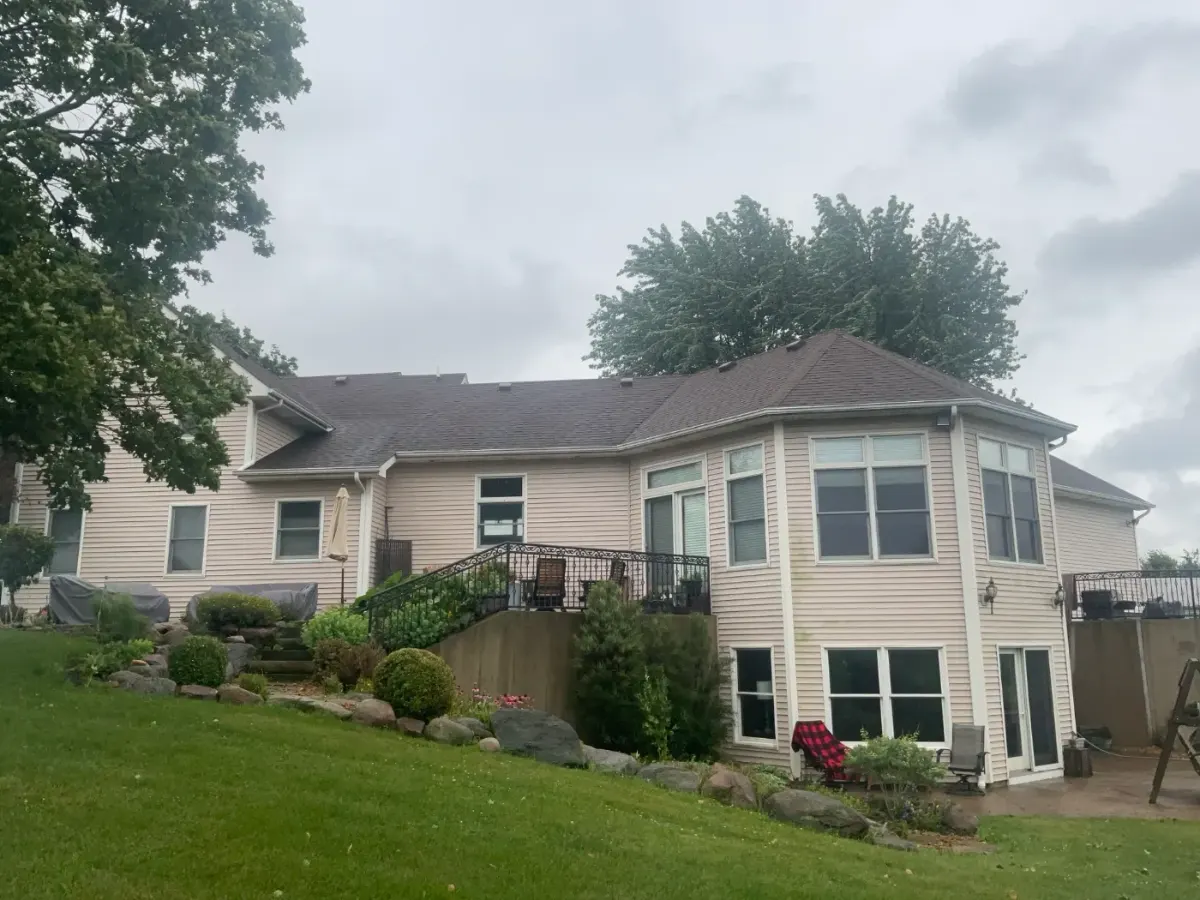
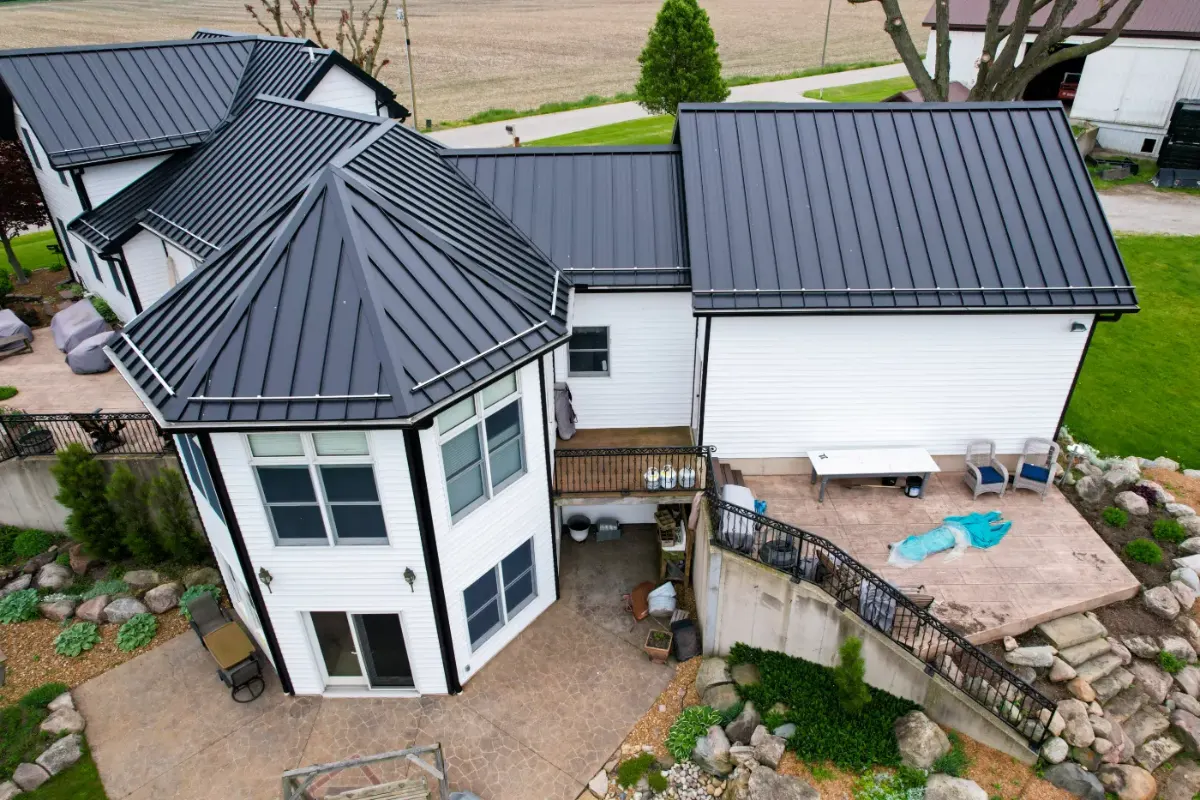
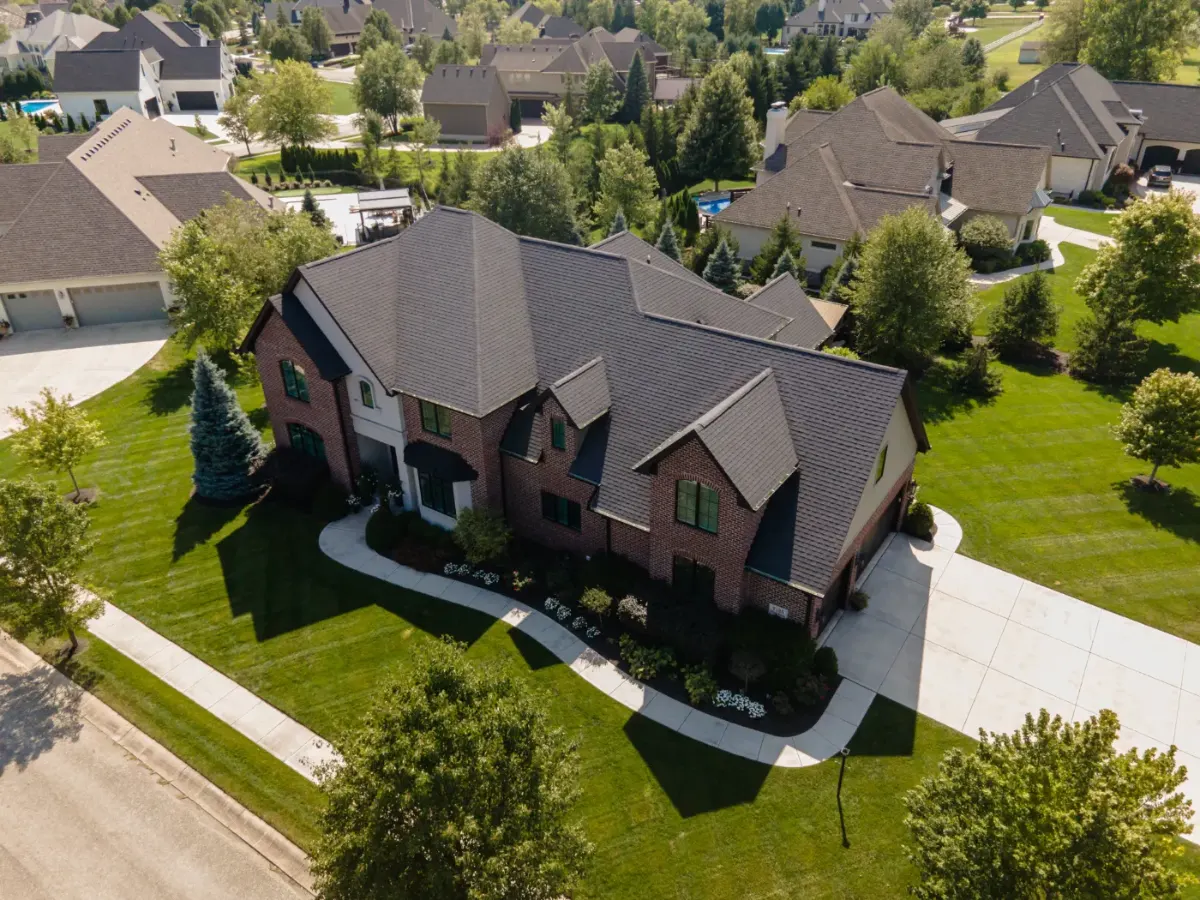
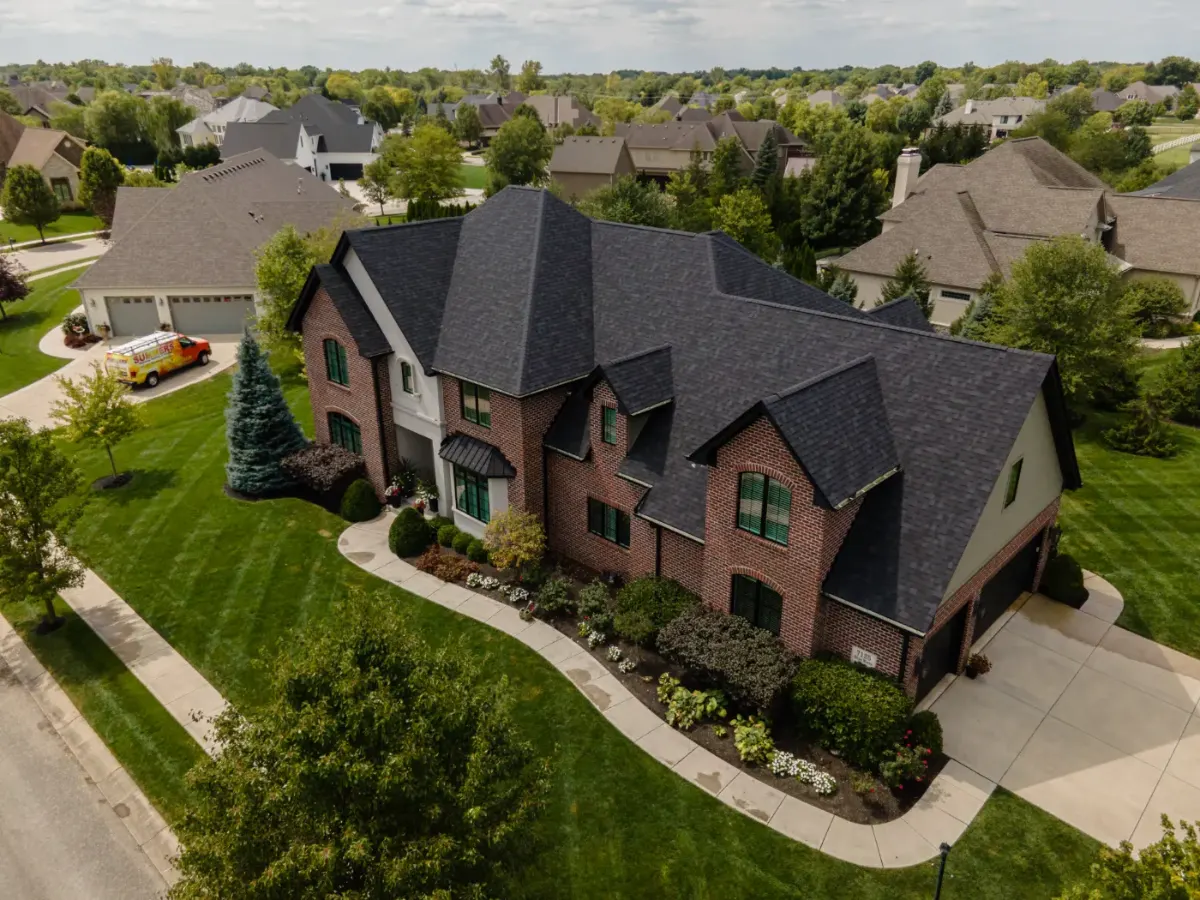
Recent Clay City roofing projects
Before-and-after documentation from real Clay City projects. Same photo angles before and after the work.
What we see most often on Clay City roofs
Clay City homeowners typically call us about these scenarios.
Algae Streaking on the North Slope
Those black streaks running down shaded Clay City slopes are airborne algae feeding on the limestone filler in the shingle mat. They are cosmetic at first and hold moisture against the surface over time. Clay City Roofing tells you plainly whether the roof needs cleaning, algae resistant shingles at replacement, or nothing at all yet.
Tree Limbs Resting on the Roof
A limb doesn't need to break loose to hurt your roof. If it rests on the shingles, every gust rubs it back and forth over the same spot until the granules are gone in a strip. Clay City Roofing points out which branches should come back and which ones clear the slope well enough to stay.
Leaks at Chimneys, Pipes, and Skylights
Flashing and pipe boots fail long before the shingle field does. Rubber boot collars split under Clay City sun, commonly around the ten to fifteen year mark by industry experience, and chimney counterflashing pulls loose as mortar joints age. Clay City Roofing replaces the failed detail and checks the decking under it, because a slow boot leak usually rots more wood than it stains drywall.
Skylight Staining the Ceiling Below
A skylight that leaks is usually a flashing kit that has outlived the roof around it, not a failed unit. Clay City Roofing reflashes Clay City skylights to the manufacturer detail or replaces aged units with your sign off, and either way the decking around the curb gets checked while the opening is exposed.
Roof Leaking After a Storm
Wind lifts shingle tabs and breaks seal strips, and the leak often shows up rooms away from the entry point as water tracks along decking and framing. Clay City storms produce exactly this call every spring. Clay City Roofing traces the actual entry point, documents wind damage to carrier standards, and repairs the field, not just the stain on the ceiling.
Holes Left by Dish and Panel Mounts
Anything bolted to a roof puts a hole through it, and that hole is only as good as what went in around it. Dish and panel installers often shoot a lag straight through the shingle and cover it with a dab of sealant, which holds until the sealant cracks. Clay City Roofing finds abandoned mounts on Clay City inspections, flashes or patches the opening properly, and checks the decking below it.
Three Simple Steps
Discipline shows up at every stage of a Clay City Roofing project, beginning with the free inspection and carrying through completion.
Free Inspection
The roof gets reviewed, conditions get photographed, and the findings come back to you in plain, practical language. You pick the time the inspection happens.
Transparent Estimate
A written outline detailing the recommended work and how each item benefits your property. No pressure. We explain options at a comfortable pace.
Quality Installation
Crews who work attentively, follow consistent timelines, and respect your property. Manufacturer warranty registration handled in your name.
Clay City on Our Second Opinion
4.9 stars across 2,307+ Google reviews.
"Designer shingle install with Class 4 impact rating. They walked us through what the rating does and does not cover and told us to ask our agent about the policy side. The math made sense and the curb appeal is a bonus."
"Hail damage replacement, insurance accepted their documentation without question, install completed on schedule. Manufacturer warranty registered in our name. Clean process."
"Full replacement with Owens Corning Duration in Onyx Black. The crew was respectful of our landscaping, cleaned up thoroughly with magnet sweeps for nails, and the closeout documentation was professional."
Our Most Asked Clay City Roofing Questions
Straight answers to the questions Clay City homeowners ask most.
Indiana Weather Affects Roofs Year Round
Clay City homeowners know the pattern: spring hail with severe thunderstorms, a summer of UV exposure, wind storms every fall, freeze thaw cycles all winter. Indiana weather swings as widely as anywhere in the country, and reading those swings is what lets us plan maintenance, repairs, and replacement work properly.
Hail Bruising And Cracking
Hail is a regular guest in Clay County during peak storm months, and it does damage that is easy to miss from the ground. Bruised shingles lose granules and start cracking, which shortens roof life fast. When called in after a hail event, we check for the round impact marks, soft spots, and mat damage that tell the story.
Wind Lifting Shingles
Straight line winds over 60 mph are not rare here, and the May 2026 storm that downed poles in Clay City is a reminder of what these fronts can do. Wind lifts shingle tabs, breaks the sealant strip, and tears sections off completely. We look for lifted tabs, exposed nails, and missing shingles, then repair or replace based on the extent.
Ice Dam Backup
Indiana winters bring freeze thaw cycles that create ice dams along eaves, especially on lower pitched roofs. The ice pushes water back up under shingles where it was never meant to go, and the leaks show up inside months later. We check for the telltale staining and address underlayment and flashing details during replacement.
Granule Loss On Aging Roofs
Mature tree canopy across Clay City drops leaves, seed pods, and moss debris that accelerate granule loss on older shingles. Once the granules go, UV eats the mat and the roof ages fast. For Clay City homes with roofs past their prime, we quantify how much life is left and lay out repair versus replacement honestly.
Choosing the Right Roof for Clay City Homes
An honest breakdown of the three systems we install most frequently.
Architectural asphalt shingles are the most common choice for Clay City homes, and for good reason. They cost less than metal or premium designer options, come in a wide range of colors that suit older gable and cross gable roofs, and carry solid manufacturer warranties from the major shingle makers. Weather performance is dependable against the wind and rain that roll through south central Indiana each spring and summer, and the dimensional look adds curb appeal compared to the old three tab shingles a lot of these houses started with. For most Clay City homeowners planning a full replacement, architectural asphalt hits the balance point between budget, appearance, and service life.
Class 4 impact resistant shingles are built to take hail that would bruise or crack a standard asphalt shingle. Given how often Clay County sees hail during spring and summer storm season, they are worth considering, especially if your roof has already taken hail damage once. The reinforced mat and modified asphalt hold up better to impact and tend to retain granules longer under a mature tree canopy. Before you commit, ask your insurance carrier whether your policy offers a premium credit for a Class 4 roof, since some do and some do not. We can walk you through the tradeoff between the higher material cost and the longer expected service life.
Standing seam metal has the longest service life of the three options, often several decades with minimal upkeep. Concealed fasteners mean no exposed screw heads to back out over time, and the smooth panels shed snow, ice, and debris rather than trapping it. That matters for Clay City homes under heavy tree cover where organic buildup shortens shingle life. The tradeoff is honest, the upfront cost is meaningfully higher than asphalt, and you are essentially buying decades of low maintenance in one payment. For homeowners who plan to stay in the house long term, the math often works out.
Every Kind of Roofing Job in Clay City
Roof Inspections
If wind or hail has come through Clay City, an inspection is the step before any claim. We look for the bruising, creasing and impact marks an adjuster is trained to find, and we photograph each one with a reference so its location is obvious. Then you decide.
Filing isn't automatic, and we will say when damage looks too light to be worth the deductible. When it is worth filing, you hold documentation dated before the claim, which makes the conversation with your carrier shorter and a good deal less frustrating.
Roof Inspections in Clay City ›Roof Repair
Some repairs belong on a claim and some do not. Sudden damage from wind or hail is usually covered. Wear that piled up over years usually is not.
We inspect first, record what we see, and give you an honest read before you call your carrier, because a denied claim still sits on your record. When damage is limited to one slope of a Clay City roof, a straightforward repair paid out of pocket often ends the matter faster and with far less paperwork than filing would. Either way, you get the photos and the written scope, so the choice is yours to make with real information in hand.
Roof Repair in Clay City ›Emergency Roof Repair
Urgent work still gets documented, and here it matters even more. Before anything is covered or moved, we photograph the damage exactly as we found it, wide enough to show the roof and close enough to show the failure. Those pictures become the record your carrier looks at, and they cannot be recreated once the tarp goes on.
You receive a written description of what was done to secure the roof, what it cost, and what the permanent repair will involve. Nothing about an emergency in Clay City should leave you guessing later.
Emergency Roof Repair in Clay City ›Roof Replacement
When a storm damages enough of a roof, a carrier may pay to replace it rather than repair it. That process runs on documentation. We inspect, photograph damage across each slope, and write up what we find in language that matches how adjusters work.
If a claim is approved, we build from the approved scope and point out whatever was left off it, such as flashing or ventilation the roof genuinely needs. If the claim is denied, you still hold a clear picture of your Clay City roof and a real choice about what comes next.
Roof Replacement in Clay City ›Designer Roofing
Timing matters more with these shingles than with standard ones. They are thicker and stiffer, so cold weather makes them harder to handle and slower to seal down. Late spring through early fall is the comfortable window in Clay City, when temperatures let the sealant strips bond the way they should.
Color selection goes better in that window too, since you can look at samples in real daylight rather than under a gray sky. If you are planning ahead instead of reacting to a leak, aim for the warm months. Bring the samples inside as well, since the color looks different under a porch roof.
Designer Roofing in Clay City ›How an Inspection Usually Ends
There are a handful of ways this goes, and the most common one surprises people. Quite often the roof is fine.
It has wear on it, the sun side looks older than the shaded side, and it's going to need replacing at some point, but not this year and not next. When that's what we find, that is what we tell you, and we'll put a rough sense of remaining life in writing along with what to watch for so you're not caught off guard later.
The next most common outcome is a repair. A split collar, a section of failed flashing at a wall, a valley that needs to come apart and be redone, or wind damage confined to one slope. Repairs get priced the same way replacements do, with the work described and the materials named, and we'll tell you honestly whether the repair is buying you a few good years or simply holding the line until you're ready for the bigger job.
When a full replacement really is the answer, we'd rather explain it than assert it. That usually means walking you through the photographs and pointing at the specific conditions driving the recommendation: the deck, the number of layers, the state of the fastening, the flashing that can't be reused, or a surface that has run out of granules. If a homeowner cannot see it in the pictures, we have not made the case.
Now and then an inspection ends without a clear answer, usually because a leak has not shown itself since the last hard rain. In that case we mark the suspect areas, make them watertight for the moment, and come back the next time the weather cooperates instead of replacing things on a hunch.
Whatever the answer, the paperwork looks the same and the pressure is the same, which is to say none. You get the findings, the photos, and a written scope for whichever path applies. What you do with all of it, and when, is entirely up to you.
Pitch, Access and Your Clay City Estimate
Two things about your particular house move an estimate more than most homeowners expect, and neither one has anything to do with the material. The first is how steep the roof is. Up to a certain pitch a crew walks the surface, carries bundles up the ladder and works at a steady pace.
Past that point everything changes. Roof jacks and planking go up first, anchors get set, bundles are moved in smaller loads, and the pace drops noticeably. On a very steep house the labor can be a different order of magnitude from a ranch with the same area.
The second is access. A crew needs somewhere to park the dump trailer close enough that debris goes straight into it instead of onto your lawn and then into it a second time by hand.
They need room to set ladders on more than one side, a place for the material to land, and a path that doesn't run through a flower bed. When a house sits on a tight lot with a fence line close to the walls, mature plantings under the eaves, or a driveway that only reaches one corner, all of that becomes hand work and it shows up in the hours.
Height compounds both. A two story house with a walkout at the back can have one eave at a comfortable ladder height and another a full story further down, and the far side may need staging that a single story house never requires. Wires crossing the driveway, a low limb over the roof, or a screened porch that has to be covered and protected all add time before anybody touches a shingle.
None of this is padding, and any of it can be talked through. Sometimes moving a car out of the way or taking down a section of fence for a couple of days genuinely changes what the work takes, and a limb trimmed back ahead of time can do the same. We'd rather tell you that in advance than absorb it quietly or spring it on you once the crew is already in your driveway.
Before You Sign and While the Clay City Job Runs
The questions split neatly into two groups, and mixing them up is how people end up frustrated. Before you sign, the questions are about scope and accountability.
What exactly is coming off, what is going back on, who is doing it, what happens when the wood is worse than expected, and what the workmanship coverage says in writing. Those all have to be settled while you still have the option of hiring somebody else, because afterward they become requests rather than terms.
Once the job is scheduled, the questions become logistical, and they're worth asking a few days out. What time does the crew arrive and how many days is this expected to take. Where should the dumpster sit and where do you need cars moved from.
Will the material be delivered ahead of time and is it going on the roof or in the driveway. Does anybody need to be home, and how does the crew get to the attic if there's work to do inside.
During the job, the useful questions are short and specific. At the end of the first day, once the tear-off is done, ask what the deck looked like and ask to see the photographs while the roof is still open.
That's the moment when everything hidden becomes visible, and it's the last chance to see it for another few decades. If anything is being added to the price, that is when you should be hearing about it, well before the last day.
After the last shingle goes on, there are only a couple left. Walk the property with the lead, look at the flashing details up close where you can reach them, and get the final paperwork including the workmanship terms and whatever registration the material coverage requires.
Ask when the town inspector is coming if a permit was pulled. Then keep the folder somewhere you will find it, because the next person to need it might be a buyer's inspector some years from now.
Roof Styles You'll Find on Clay City Streets
The oldest houses we work on most weeks are single story ranches and split levels from the sixties and seventies. They tend to have simple gable roofs, deep overhangs, and a deck built from spaced planks rather than sheet material. Plank decking holds up well as long as it stays dry, but the boards shrink over a few decades and the gaps between them open up.
A nail driven into one of those gaps holds nothing at all, so before we price a house like that, someone walks it and reads the deck through the shingles. That answer moves the scope more than anything else we find up there.
Two story colonials from the eighties and nineties are the next wave you see around here. The pitch gets steeper, the roof carries more area, and there's almost always a garage or family room roof running into a wall of the house. Sidewall and step flashing is where those homes give us trouble.
Siding frequently went on over the flashing instead of the other way around, and once water gets behind that joint it travels down inside the wall and stains a ceiling a room away from the actual hole. We open those areas up and reflash them instead of running a bead of sealant and hoping.
Newer subdivisions bring their own list. Rooflines got busier, with cross gables, dormers, and valleys that funnel water from several planes into one channel.
Every extra cut is a place where a rushed crew can hide a shortcut. Builder grade venting is often light for the attic volume underneath it, and a low slope porch or sunroom section usually got the same shingles as the steep part of the house, which is not what that pitch calls for.
Whatever the era, the order we check things stays the same. Ventilation comes first, since a hot damp attic cooks shingles from below and nothing installed over it lasts the way it should. Flashing is next, because that's where most leaks actually start.
Then we get to decking condition and how many layers are already up there. A homeowner in an older neighborhood and one out in a newer section usually need different work, and a written scope ought to show you why.
Roofing Work in Cold Weather
There's a lot of confusion about winter installs, and most of it comes from people repeating half of a true thing. The true part is that shingles rely on a heat activated adhesive strip to bond to the course below, and in cold weather that strip does not soften on its own.
What follows from that's not that roofing stops. It is that the crew has to hand seal, placing a dab of the right compound under each tab so the bond exists until the sun does the rest in the spring.
The material itself also behaves differently in the cold. Shingles get stiff and can crack if they are bent sharply or dropped, so bundles get kept warm and handled gently, and cutting gets done with more care. Nail guns need watching, since a shingle that's stiff enough will let a fastener sit proud or drive through.
None of this is exotic. It is simply slower and requires a crew that has done it before rather than one figuring it out on your house.
What we won't do is install over a wet or frosted deck, or tear off more than we can dry in before the weather turns. That's the real limit on winter work.
Daylight is short, the surface may not be safe to walk until midmorning, and a roof left open in a snow event is a serious problem. So we take smaller bites, plan around the forecast, and sometimes call off a day that looked fine the night before.
Repairs, on the other hand, happen whenever they need to. Leak calls do not wait for spring, and there's a lot we can do in the cold to stop water from getting into a house, even when the permanent fix has to wait for a warmer, drier stretch. If you're being told nothing at all can be done until the weather breaks, that usually means the company would rather not come out.
What Clay City Wants to Know First
Which Clay City Areas We Cover
These are roofing jobs we've finished in neighborhoods around Clay City and nearby. Pick one to see what we picked up working on those streets.
Where we respond near Clay City
Indiana-licensed crews dispatched to Clay City and the closest surrounding communities.

Roofing Systems Compared in Clay City
Quick reference for the four residential systems we install most often. Pricing reflects typical Clay City installations.
These are typical ranges in the Clay City market as of 2026. Where an upper number carries a plus sign, inspection findings can push your project past that maximum. The written scope and quote cost you nothing.
Clay City Roofing is powered by Indy Roof & Restoration
When you call, Indy Roof & Restoration answers. When work starts, their crew shows up. When it is done, their warranty holds. 2018 is when they started in central Indiana, and Clay City has been in the service area ever since. Check the reviews yourself: 2,307+ of them, verified on Google, averaging 4.9 stars.
Licensed and insured · License #RC21100059
Credentials and ratings include Owens Corning Preferred Contractor, Malarkey Certified Contractor, BBB A+ Accredited and Google Google Guaranteed. Their work has drawn coverage from FOX59, WISH TV, and RTV6.
Expert Clay City Roofing Crews Available Now
Whether a recent storm knocked shingles loose, your Clay City roof is showing its age, or you are just planning the replacement ahead of the next storm season, now is the time to get eyes on it. Schedule a free inspection with no obligation, and we will document everything you need for a possible insurance claim.